
Best Practices for Continuous Safety Improvement
by CR Express Team, Logistics Team • 20 min read
Best Practices for Continuous Safety Improvement
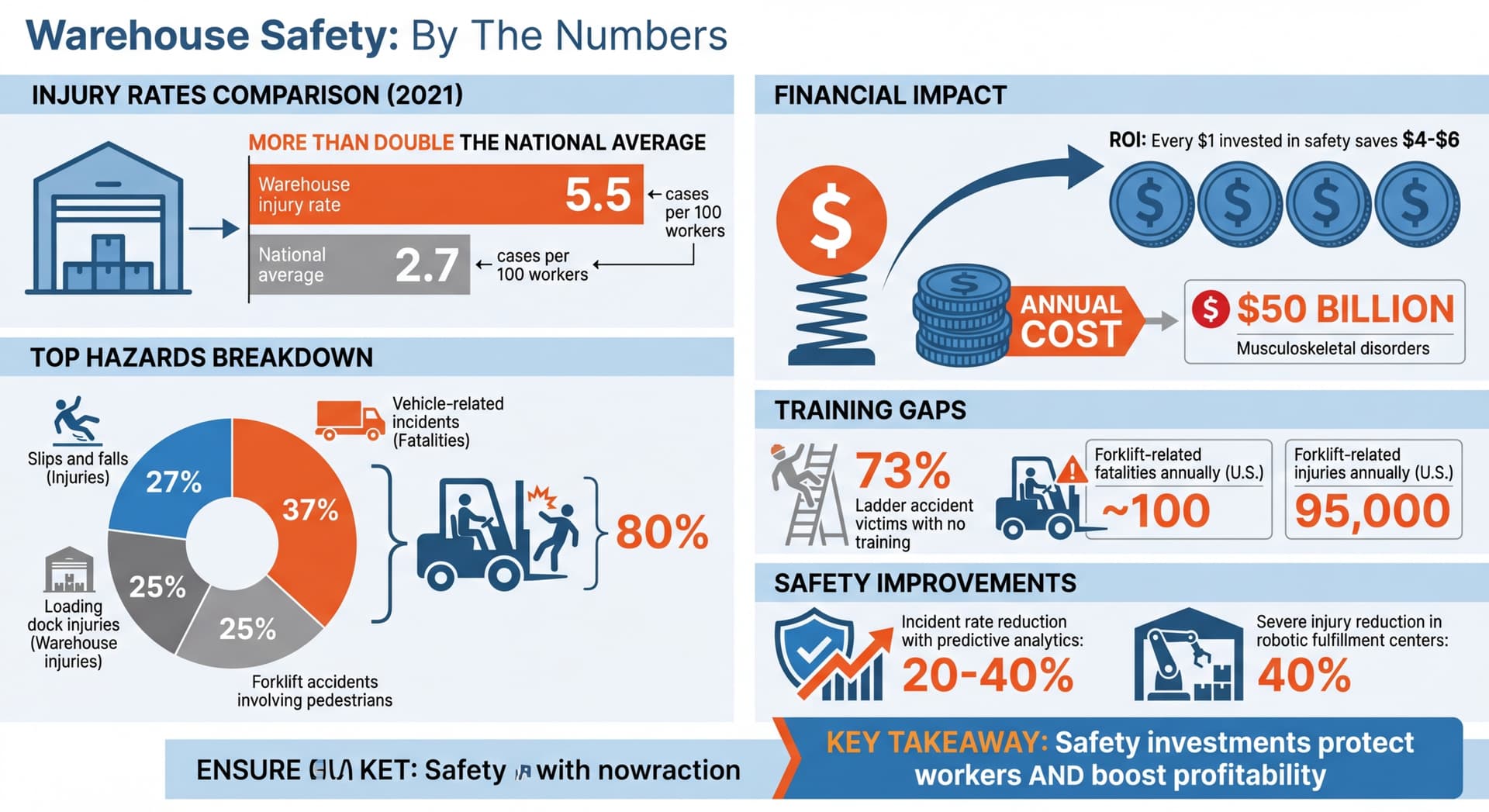
Warehouse safety is non-negotiable. With injury rates in warehouses more than double the national average (5.5 vs. 2.7 per 100 workers in 2021), improving safety measures isn't just about compliance - it's about saving lives and cutting costs. For every $1 invested in safety, businesses save $4–$6 by reducing injuries, lowering compensation costs, and preventing downtime.
Key insights include:
- Top Hazards: Vehicle-related incidents (37% of fatalities), slips and falls (27% of injuries), and musculoskeletal disorders (costing $50 billion annually).
- Solutions: Leadership engagement, employee training, regular safety audits, and leveraging technology like IoT sensors and AI for real-time monitoring.
- Emergency Readiness: Clear evacuation plans, designated safety roles, and frequent drills.
- Ergonomics: Smart workstation design and proper housekeeping to reduce risks.
- Data-Driven Improvements: Use metrics like TRIR and near-miss rates to track and improve safety performance.
Safety isn't just about avoiding risks - it's about creating efficient, well-run operations that protect workers and boost productivity.
Warehouse Safety Statistics and ROI Impact
Continuously Improve for Safety Excellence | Online Safety Training | Workplace Safety Certification
sbb-itb-c0b8770
Creating a Safety-Focused Workplace Culture
Building a workplace culture centered on safety isn't just about ticking boxes on a checklist - it’s about making safety a core part of every decision and action. The goal is to move from reacting to incidents to preventing them altogether, with every employee feeling responsible for maintaining a safe environment. When safety becomes part of daily operations, it not only protects employees but also enhances overall efficiency.
Management's Responsibility in Safety
Strong leadership is the backbone of any effective safety program. For safety to truly matter, management needs to actively participate in safety initiatives. This means attending safety meetings, joining emergency drills, and walking the floor with frontline workers to identify risks and solutions. These visible actions send a clear message: safety is a priority at every level of the organization.
"Commitment forms the foundation of any successful health and safety programme, requiring leadership engagement from senior management through to frontline supervisors."
- HSQE Consultancy
Beyond participation, leadership must allocate resources to safety. This includes providing budgets for high-quality personal protective equipment (PPE), advanced safety technologies like sensors or AI monitoring systems, and ergonomic tools. These investments show that safety isn’t just a talking point - it’s a commitment.
Equally important is fostering a "no-blame" culture. Employees need to feel safe reporting near-misses and hazards without fear of repercussions. This shift from punishment to learning encourages open communication, which is vital for identifying and addressing risks before they escalate. Ken Smith, Director of Safety and Training at Canon, highlights the importance of executive involvement:
"It's important that you have a senior executive champion or sponsor who periodically communicates the idea that this company is committed to safety and training."
- Ken Smith, Director of Safety and Training at Canon
These leadership actions create the foundation for empowering employees to take ownership of safety.
Encouraging Safe Work Practices
Transforming safety into a shared responsibility starts by involving employees in the process. Setting up systems for reporting hazards ensures that issues are documented and addressed promptly. Engaging employees in daily safety discussions and risk assessments leverages their firsthand knowledge of workplace risks - insights that managers might not have.
Recognition programs can be a powerful way to reinforce safe behaviors. Rewarding employees who follow protocols or identify potential hazards encourages proactive participation. These programs work best when they focus on positive actions, rather than simply tracking metrics like "days without injury." For instance, tools like safety suggestion cards allow workers to share ideas for improvement, and some companies even offer weekly prizes for the best suggestions to keep engagement high.
Regular toolbox talks and safety meetings provide opportunities for teams to discuss challenges and brainstorm solutions together. By combining feedback systems, recognition, and open communication, organizations can create an environment where safety is a shared responsibility - not just a directive from management.
Training and Certification Programs
Effective training is the key to turning good intentions into real safety improvements. In the warehousing industry, where the injury rate stands at 4.7 per 100 workers - almost double the national average of 2.7 per 100 - training programs are critical for protecting employees and staying compliant with regulations. The challenge lies in making sure training isn't a one-time event but an ongoing process that adapts to workplace changes.
Safety Training During Onboarding
New employees need a solid foundation in safety practices. Initial training should cover essential topics like the correct use of personal protective equipment (PPE), understanding pedestrian and vehicle zones, preventing slips and trips, and knowing emergency exit routes. For workers using specialized equipment, certification is required before they can begin. OSHA mandates that forklift operators, for example, must receive training specific to the type of vehicle they’ll use and the conditions of their workplace. This isn't just about meeting legal requirements - forklift accidents cause around 100 fatalities and 95,000 injuries each year in the U.S..
Training should also focus on role-specific needs. Forklift operators must understand vehicle stability and load limits, while manual pickers need guidance on ergonomic lifting techniques to reduce musculoskeletal injuries. Ladder safety is another critical area, as 73% of ladder accident victims in the workplace never received proper training. Addressing these gaps during onboarding is essential.
To ensure new hires retain and apply what they learn, use clear and simple language during training sessions. A mix of classroom instruction and hands-on exercises helps employees translate safety concepts into practical actions. Some companies are even using augmented reality (AR) and virtual reality (VR) tools to enhance training. For example, in April 2019, agricultural equipment manufacturer Agco introduced AR smartglasses for its assembly line workers. This technology reduced inspection times by 30% and cut tractor production time by 25%, providing workers with real-time safety and operational guidance.
Laying this groundwork sets the stage for continuous improvements in warehouse safety practices.
Periodic Training Updates
Safety training shouldn’t stop after onboarding. Ongoing updates are essential to keep safety standards strong. Annual refresher courses, including mandatory fire safety training, are a good starting point. However, retraining is also necessary whenever workplace changes occur, such as the introduction of new equipment or updated safety systems, which may render previous training outdated. If an employee shows a lack of knowledge or unsafe behavior, immediate retraining is a must.
Training should also address new hazards as they arise. For example, when physical or health risks are introduced into the workplace, employees need immediate instruction.
"Implement continued training and ongoing inspections and audits to ensure that those practices are being adhered to."
- Jeremy Wisdom, Logistics, Operations, and Supply Chain Consultant at Canon Business Process Services
Short, focused safety meetings, often called "toolbox talks", are another effective way to reinforce safety practices. These brief sessions can cover recent incidents, new technology like AI or automation tools, or changes in regulatory standards. Providing workers with on-the-spot access to standard operating procedures (SOPs) through mobile apps or digital platforms allows them to reference safety protocols when needed.
Finally, document all training sessions and keep these records for at least three years. This not only ensures compliance but also helps identify areas where additional training may be required.
Regular Inspections and Safety Audits
While training is an essential part of workplace safety, it’s not enough on its own. Regular inspections and audits are what turn safety policies into everyday habits. With the fatal injury rate in warehousing more than double that of other industries - and fatalities increasing by over 100% since 2019 - it’s clear that consistently checking safety conditions is non-negotiable. Inspections help spot risks before they lead to injuries, and audits ensure compliance with OSHA standards and other regulations. A structured inspection schedule is key to making safety policies work in real life.
Creating an Inspection Schedule
The first step to building an effective inspection schedule is understanding the unique risks in your warehouse. Start with a thorough risk assessment to identify problem areas, such as malfunctioning machinery, unstable shelving, or potential fire hazards. Avoid a cookie-cutter approach - what works for a warehouse handling heavy machinery won’t necessarily apply to one storing lightweight goods.
Break your schedule into tiers:
- Daily checks: Operators should inspect equipment like forklifts and pallet jacks every day.
- Weekly audits: Focus on basics like clearing aisle obstructions and ensuring PPE is available.
- Annual reviews: Conduct a deep dive into structural integrity and regulatory compliance .
Pay extra attention to high-risk areas, such as loading docks, where nearly 25% of warehouse injuries occur.
"A risk assessment acts as a diagnostic tool, shining a light on areas of vulnerability and providing a roadmap for corrective actions."
- Joakim Franzon, Director of Product Compliance, AutoStore
Standardized checklists based on OSHA guidelines can help streamline the process. These should cover PPE, material storage, equipment operation, and emergency preparedness. Reviewing past incident reports can also highlight recurring hazards, allowing you to adjust inspection frequency for problem areas. Don’t overlook input from frontline workers - they often notice risks that formal inspections might miss . A well-thought-out schedule lays the groundwork for audits that ensure safety compliance remains a top priority.
Using Audits to Maintain Compliance
Once your inspection schedule is in place, audits take safety to the next level by ensuring compliance and addressing hazards. These audits aren’t just about ticking boxes - they identify specific risks, such as blocked exit routes, and verify that safety equipment like fire extinguishers and sensors are in working order. They also help reinforce safety protocols among staff . Document every audit carefully, and prioritize addressing findings based on their severity and likelihood of occurrence. This not only keeps your warehouse OSHA-compliant but also reduces legal risks and avoids costly fines .
As your operations evolve - whether through new equipment, seasonal demand shifts, or changes in inventory - your audit process should adapt, too . Bringing in third-party experts periodically can provide fresh insights and uncover hazards that internal teams might miss. Technology can also play a big role here. Mobile apps let workers report safety issues instantly, giving managers real-time updates. Some facilities even use IoT sensors to detect unusual movements or environmental changes that manual checks might overlook.
"By conducting these assessments routinely, warehouses can proactively identify potential hazards, addressing them before they escalate into significant concerns."
- Joakim Franzon, Director of Product Compliance, AutoStore
At CR Express, these inspection and audit practices are deeply embedded into daily operations. They help us maintain high safety standards while driving continuous improvement. By making safety an ongoing effort, we strengthen the safety-first mindset that defines our workplace culture.
Technology for Safety Monitoring
Manual inspections and audits play an important role in workplace safety, but they fall short when it comes to detecting hazards in real time. This is where technology steps in, transforming occasional checks into continuous monitoring. For instance, 80% of forklift accidents involve pedestrians, and workplace injuries cost U.S. companies over $50 billion annually. Real-time monitoring provides workers and managers with actionable insights to prevent accidents before they happen. When paired with training and regular audits, these systems create a safety net that spans the entire warehouse.
IoT Devices for Equipment Monitoring
IoT sensors bring a new level of connectivity to warehouse equipment, turning them into active safety systems. For example, vibration and heat sensors installed on forklifts, conveyors, and storage units monitor performance around the clock. These sensors can detect anomalies that might signal equipment failures, helping to address issues before they escalate.
Environmental monitoring is another critical application. IoT-connected sensors track conditions like temperature, humidity, air quality, and gas levels throughout the facility. If any of these factors reach hazardous levels, the system sends immediate alerts. For collision prevention, proximity sensors and RFID tags work together. When a forklift gets too close to a pedestrian wearing an RFID-enabled device, the system activates alarms or flashing lights to prevent accidents. This is particularly important, as "struck-by" accidents account for 37% of fatal injuries in the transportation and storage sector.
Wearable devices add another layer of safety by monitoring worker vitals and fatigue levels, alerting supervisors to signs of overexertion. Features like geofencing ensure that only authorized personnel can access high-risk machinery, while beacons track the real-time location of workers and equipment. By integrating IoT devices with a Warehouse Management System, safety data becomes centralized, enabling faster responses. Following OSHA's guidelines for monthly sensor checks also helps maintain system reliability.
While IoT devices excel at collecting data, AI systems take it a step further by analyzing and acting on this information in real time.
AI and Automation in Safety Management
AI shifts safety monitoring from a reactive approach to a proactive one. Traditional motion sensors often trigger false alarms for objects like pallets or carts, leading to "alert fatigue." AI-powered vision systems solve this problem by distinguishing between human forms and non-hazardous objects, reducing false alarms and increasing trust in safety protocols. These systems can even analyze movement patterns to identify high-risk areas, such as blind spots where forklifts and pedestrians frequently intersect. In some cases, AI can predict collisions seconds before they happen, giving operators a critical window to act.
Organizations using predictive analytics in safety have seen incident rates drop by 20–40%, while robotic fulfillment centers report a 40% reduction in severe injuries like falls and fractures. AI systems also adapt to changing conditions, whether it’s low lighting, shifting layouts, or clutter during busy periods. Alerts are sent directly to vehicle dashboards, headsets, or smart badges, ensuring operators can respond immediately.
"The ability to intervene moments before impact turns AI from a watcher into a guardian."
- ELOKON Inc.
Autonomous mobile robots (AMRs) further enhance safety by using technologies like LiDAR and machine learning to navigate dynamic environments. These robots can reroute themselves around obstacles or people in real time. By assigning hazardous tasks, such as heavy lifting, to machines, automation significantly reduces workers’ exposure to physical dangers.
Emergency Preparedness Planning
Effective emergency preparedness is key to maintaining control when unexpected events strike. Even with advanced safety measures, emergencies happen. In the U.S., the warehouse sector sees an average of 16 fatalities annually, with an injury rate of 5.5 cases per 100 employees - more than double the national average of 2.7. Whether it’s a fire, chemical spill, or serious injury, preparation is what separates order from chaos. OSHA requires facilities without a dedicated fire brigade to have a written Emergency Action Plan (EAP), which outlines the actions employees must take during a crisis.
A solid EAP should include detailed evacuation procedures, ensuring at least two clearly marked and unobstructed exit routes located far apart. It should also address how to account for all personnel after an evacuation and assign specific emergency response roles. Fire safety measures - like sprinklers, alarms, and regularly inspected extinguishers - must be part of the plan. Additionally, trained first-aid personnel should be available to respond within 3–4 minutes. For warehouses handling hazardous materials, the plan must also cover spill control procedures and the proper use of personal protective equipment (PPE). These measures create a foundation for managing emergencies effectively.
Establishing Emergency Response Roles
Assigning roles ahead of time ensures everyone knows their responsibilities when every second counts. Designate a safety coordinator and assign specific tasks, such as first-aid responders and floor wardens, to streamline emergency actions. These roles should be explained during onboarding and reinforced through annual training sessions and regular safety meetings.
Emergency equipment and information must be easily accessible. Fire extinguishers, first-aid kits, and emergency manuals should be placed in visible, unobstructed areas. Posting Standard Operating Procedures (SOPs) on the warehouse floor provides quick access to instructions during a crisis. For workplaces with a multilingual workforce, emergency training should be provided in languages all employees understand. Once roles are clearly defined, regular drills help employees internalize these protocols.
Conducting Emergency Drills
Emergency drills turn plans into practiced responses. Conduct drills at least twice a year to reinforce procedures and uncover any weaknesses. These drills should go beyond fire evacuations to include scenarios like chemical spills, medical emergencies, and region-specific natural disasters. Hands-on practice with emergency tools and testing of all evacuation routes are essential components.
After each drill, conduct a formal review to identify gaps and schedule retraining as needed. Keep emergency contact lists for local medical facilities and emergency services readily available, and ensure clear reporting protocols for unsafe conditions. Regular drills not only improve response times but also help workers stay calm and focused during real emergencies, building confidence and psychological readiness.
Ergonomics and Housekeeping Standards
Creating safe and efficient workplaces starts with thoughtful ergonomic design and maintaining organized spaces. Neglecting these areas can lead to injuries and disrupt operations, especially in warehouse environments where physical strain and clutter are common challenges.
Ergonomic Workstation Design
Designing workstations with ergonomics in mind can help prevent injuries and improve overall efficiency. The goal is to tailor jobs to fit the worker, reducing muscle strain and lowering the risk of work-related musculoskeletal disorders (MSDs). For example, keeping frequently used items at standing elbow height and ensuring manual lifting happens within the "low-risk zone" (between knee and chest height) can make a big difference.
Weight guidelines are also important. Stick to manual case weights of 35 pounds or less, and for heavier loads, use mechanical aids like hoists, lifting tables, or vacuum lifters. For vehicle operators, ergonomic seats with adjustable lumbar support and vibration control can help prevent back issues and dock shock. Workers who spend long hours standing on hard surfaces can benefit from anti-fatigue mats or cushioned footwear. Additionally, providing three-sided access to pallets and using mechanical stretch wrappers can reduce awkward movements like twisting or overreaching. To avoid overhead lifting risks, store heavier items on lower or middle shelves, keeping them in the "power zone" for safer handling.
Maintaining Clean Work Areas
Keeping workspaces clean and organized isn't just about aesthetics - it’s a critical safety measure. Proper housekeeping involves smart layout planning, clear aisle markings, and regular upkeep of storage areas and equipment. Disorganized spaces are a common cause of workplace incidents, while clean and orderly environments help minimize risks.
"Housekeeping order is 'maintained' not 'achieved.' Cleaning and organizing must be done regularly, not just at the end of the shift."
One effective approach is the 5S methodology: Sort, Set in Order, Shine, Standardize, and Sustain. This system promotes daily habits that keep workspaces tidy and hazard-free, reducing the time spent searching for tools or materials. Spills should be cleaned immediately using absorbents and drip pans - avoid using compressed air, as it can create airborne dust hazards. For fire safety, maintain at least 18 inches of clearance below sprinkler heads and ensure a 3-inch transverse flue space between pallets on racks . Use color-coded floor markings to clearly separate pedestrian walkways from vehicle zones, reducing confusion and improving safety in busy areas.
Cleaning crews can also act as an extra set of eyes, spotting issues like damaged racks, hydraulic leaks, or worn dock seals. Regular maintenance schedules - such as de-greasing forklifts and removing dust buildup - are essential for preventing equipment failures.
Safety Performance Metrics and Analysis
Keeping a close eye on safety data helps spot problems early and guides actionable improvements. While audits and inspections ensure compliance is met, safety metrics are what truly measure the success of safety programs. Without these metrics, it’s hard to tell if your efforts are making a difference or just generating extra paperwork.
Key Safety Indicators
Safety metrics fall into two categories: lagging indicators, which reflect past incidents, and leading indicators, which focus on preventing future issues. For example, the Total Recordable Incident Rate (TRIR) measures the number of recordable incidents per 100 full-time employees annually. Similarly, the Lost Time Injury Frequency Rate (LTIFR) tracks injuries that lead to missed work per million hours worked. These lagging indicators provide insight into how well current safety programs are working.
On the other hand, leading indicators take a more proactive approach. A high near-miss reporting rate suggests employees are comfortable identifying hazards before they result in injuries. Other leading metrics include safety training completion rates, PPE usage rates during random inspections, and equipment maintenance compliance rates for safety-critical machinery. Additionally, the safety audit compliance rate - which measures the percentage of resolved findings compared to total findings - indicates how effectively management addresses identified issues.
| Metric | Category | Formula / Calculation Method |
|---|---|---|
| TRIR | Lagging | (Total Recordable Incidents / Total Hours Worked) x 200,000 |
| LTIFR | Lagging | (Number of Lost Time Injuries / Total Hours Worked) x 1,000,000 |
| Near-Miss Rate | Leading | (Number of Near Misses / Total Hours Worked) x 200,000 |
| Audit Compliance | Leading | (Number of Findings Resolved / Total Findings) x 100 |
| Resolution Time | Leading | Total Days for Resolution / Number of Incidents |
By focusing on these metrics, organizations can connect data to daily safety practices and drive meaningful improvements.
Data-Driven Safety Improvements
These metrics form the backbone of a proactive approach to safety. Reviewing historical incident data can reveal recurring issues. For example, analyzing when and where accidents are most likely to occur helps management allocate resources more effectively, focusing on high-risk areas and periods.
real-time inventory visibility and monitoring add another layer of accuracy, allowing for quicker interventions. Predictive analytics can even forecast equipment failures based on past patterns, enabling maintenance to happen before issues arise. Tracking the average time to resolve incidents ensures that hazards are addressed promptly once identified. Additionally, anonymous safety perception surveys can provide valuable insights into whether employees feel management prioritizes safety.
These data-driven strategies ensure safety efforts are not only reactive but also forward-thinking, creating a safer workplace for everyone.
Employee Feedback and Protocol Updates
Beyond regular inspections and advanced monitoring, employee feedback brings a firsthand perspective that's crucial for improving safety measures. Workers on the warehouse floor often notice hazards and inefficiencies that formal inspections might miss. Their input plays a key role in refining and adapting safety protocols.
Establishing Feedback Channels
To make sure safety concerns reach decision-makers, companies need to offer multiple ways for employees to share their observations. Currently, only 24% of frontline employees feel their feedback reaches leadership, and fewer than 60% of blue-collar workers are comfortable raising safety issues. This communication gap can weaken even the most well-designed safety programs.
Offering diverse reporting methods can help bridge this gap. Digital tools like mobile apps enable quick and easy reporting, while safety cards provide a more anonymous option for those hesitant to speak up. To encourage participation, some companies even reward the best safety suggestions with weekly prizes.
"Everybody has to have their eyes open. If they see something that's unsafe, something needs to be said."
- Jeremy Wisdom, Logistics, Operations, and Supply Chain Consultant at Canon Business Process Services
Organizations can further support this process by appointing a dedicated "safety evangelist" or a senior executive sponsor to advocate for the feedback system. Regular safety meetings should include time to review employee input and discuss recent improvements. This kind of proactive approach ensures feedback becomes the foundation for stronger safety practices.
Updating Safety Procedures Based on Input
Turning employee feedback into actionable changes is essential. When workers see their concerns lead to real improvements, it builds trust and encourages ongoing participation. Warehouses with strong safety records demonstrate this by making visible changes, such as updating signage, altering traffic patterns, or introducing new equipment based on worker suggestions.
Feedback should directly influence updates to standard operating procedures (SOPs). For instance, post-training evaluations can highlight areas where protocols might not align with real-world conditions. Additionally, when a near-miss or an incident is reported, conducting a root cause analysis - rather than just addressing surface-level issues - leads to more effective solutions. For example, if multiple employees report congestion in specific aisles, adjusting the warehouse layout can help prevent future accidents.
Regular safety meetings provide a structured opportunity to address these concerns and ensure that safety measures remain practical and up-to-date as warehouse operations change.
Conclusion
Improving safety is about more than just following OSHA regulations - it's about placing health and safety at the forefront, even above efficiency. With a warehouse injury rate of 5.5 cases per 100 employees in 2021 - compared to the broader industry average of 2.7 - there’s clear room for improvement. And the benefits are tangible: for every $1 spent on safety measures, businesses save $4 to $6 by reducing injuries, lowering workers' compensation costs, and minimizing equipment damage.
The best safety programs go beyond compliance, embedding hazard prevention into everyday routines. These programs thrive on leadership involvement and active reporting from employees. When workers witness their concerns leading to real changes - like improved signage, altered traffic flows, or upgraded equipment - it fosters trust and strengthens the safety culture. This approach not only safeguards employees but also boosts operational performance.
"The effectiveness of your safety systems, measures, and procedures not only affects the well-being of your workers. It also dictates the efficiency and productivity of your operations."
- Mackie Angat, Content Specialist, SC Training
Technology plays a key role in advancing safety. Tools like AI, IoT sensors, and automation help monitor equipment, anticipate failures, and keep workers out of dangerous situations. However, technology alone isn’t the solution. Regular audits, continuous training, ergonomic workspaces, and consistent housekeeping practices all contribute to a safer workplace.
This well-rounded strategy delivers clear results. Warehouses that prioritize safety not only protect their employees but also improve efficiency and cut costs. Safety isn’t a one-time effort - it’s an ongoing commitment that brings benefits across operations, workforce morale, and financial performance.
At CR Express, we are dedicated to fostering a safe, efficient, and reliable environment for both our teams and clients.
FAQs
What should we fix first to reduce warehouse injuries quickly?
To cut down on warehouse injuries fast, start by tackling the most frequent and avoidable risks. These often include manual handling problems and slips, trips, and falls. Simple steps like enhancing ergonomics, keeping walkways clear, and ensuring proper storage can make a big difference.
It’s also crucial to offer comprehensive training on how to use equipment safely and recognize potential hazards. On top of that, fostering a solid safety culture - complete with clear policies and active employee involvement - can significantly boost overall safety in no time.
How can we boost near-miss reporting without blaming people?
To boost near-miss reporting while avoiding a culture of blame, focus on creating an environment where safety and open communication are priorities. Highlight that reporting near-misses is a proactive way to prevent future incidents, not a reason for punishment.
Make participation easier by establishing clear policies, offering training, and ensuring anonymity or confidentiality for those who report. Acknowledge these reports as valuable contributions to improving safety, and incorporate them into ongoing safety initiatives. This approach shows a clear dedication to prevention rather than punishment.
Which safety metrics matter most beyond TRIR?
Tracking workplace safety goes far beyond just monitoring the Total Recordable Injury Rate (TRIR). Metrics like near-miss incidents play a crucial role by identifying potential hazards before they lead to accidents. Similarly, safety observation scores give a snapshot of how well employees are adhering to safety protocols.
Other important indicators include equipment-related incidents, which can reveal trends in machinery-related risks, and compliance with safety training to ensure workers are prepared to handle various scenarios. Audit scores provide a measure of how well safety standards are being implemented, while employee safety engagement levels reflect how actively workers participate in maintaining a safe environment.
By keeping an eye on these metrics, warehouses can pinpoint risks, improve safety strategies, and promote a culture where safety is a shared priority.