
5 Cargo Theft Risks and How to Mitigate Them
by CR Express Team, Logistics Team • 15 min read
5 Cargo Theft Risks and How to Mitigate Them
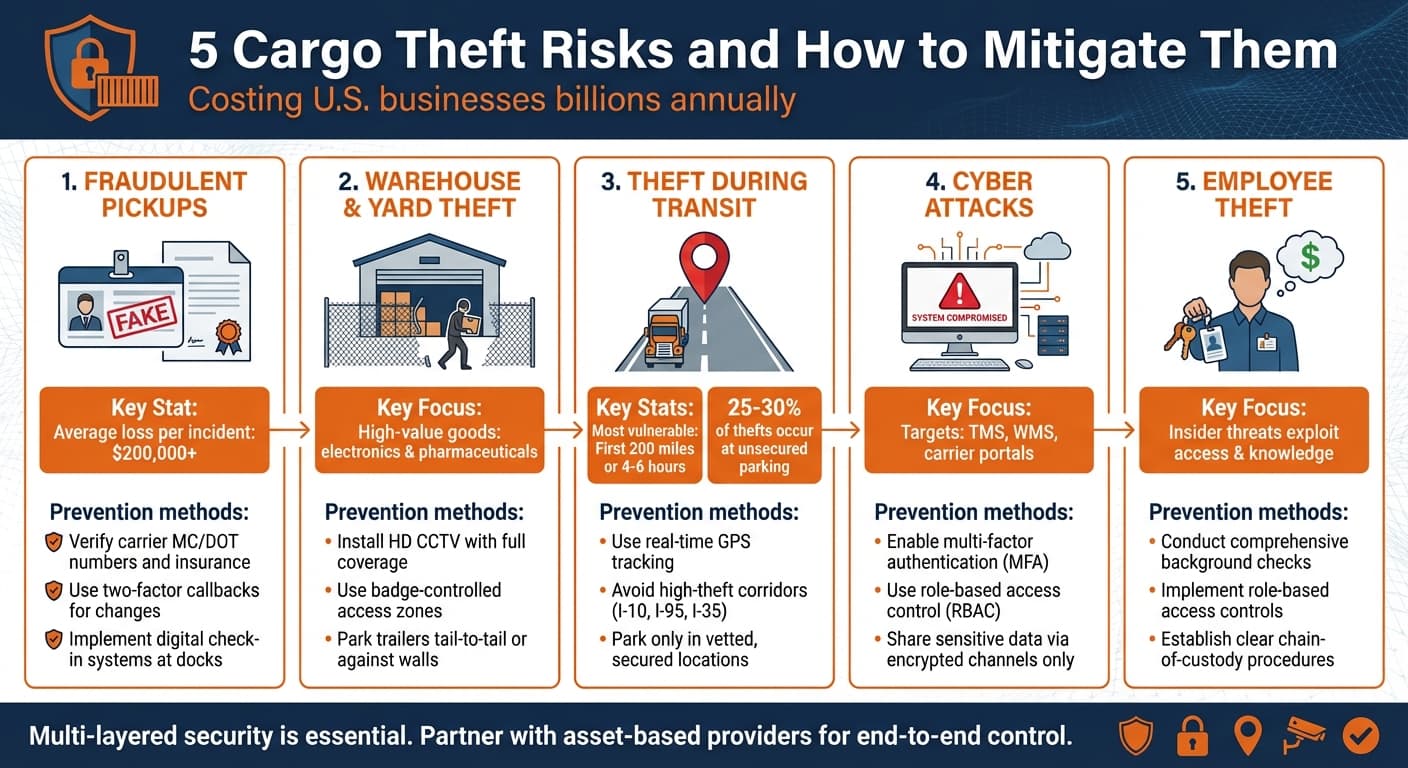
Cargo theft is a growing problem, costing U.S. businesses billions annually. Thieves use tactics like fraudulent pickups, cyberattacks, and surveillance to target high-value goods such as electronics and pharmaceuticals. Protecting your shipments requires multiple layers of security. Here’s a quick breakdown of the top risks and how to address them:
- Fraudulent Pickups: Fake carriers and forged credentials are common. Prevent this by verifying carrier details and using secure check-in systems.
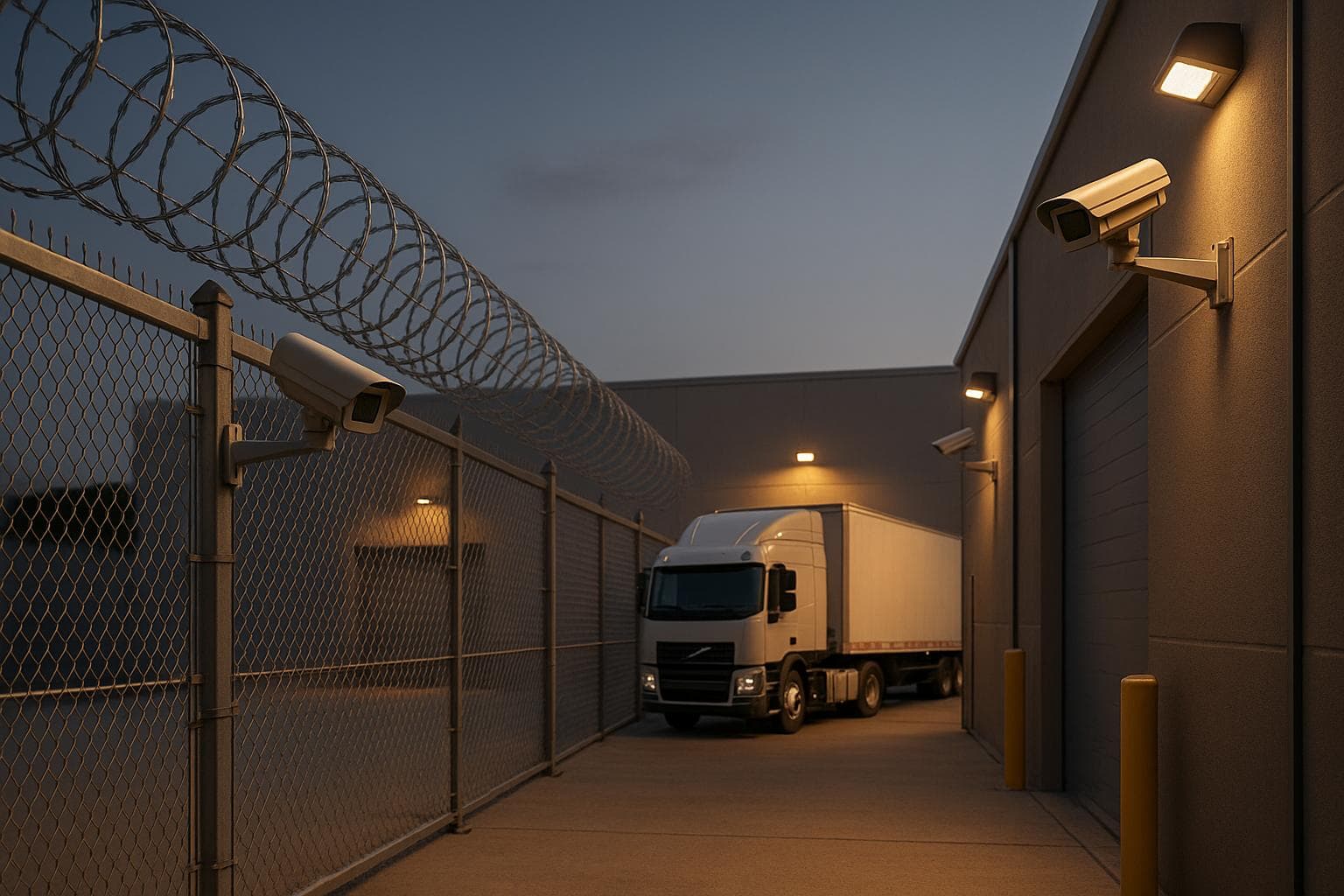
- Warehouse and Yard Theft: Poor lighting, weak fences, and lack of monitoring make facilities vulnerable. Improve security with cameras, controlled access, and proper locks.
- Theft During Transit: Stolen trucks and pilferage often occur at rest stops. Use GPS tracking, secure parking, and driver training to reduce risks.
- Cyber Attacks: Hackers target logistics systems to steal shipment data. Protect your systems with multi-factor authentication and encrypted communications.
- Employee Theft: Insider threats come from weak background checks and poor access controls. Conduct thorough screenings and implement strict procedures.
Taking these steps can help you secure your cargo and minimize losses. Let’s dive into each risk and its solutions.
5 Cargo Theft Risks and Prevention Strategies Infographic
Freight theft trends & prevention strategies for 2025
Risk 1: Fraudulent Pickups and Fake Carriers
Fraudulent pickups are becoming a serious challenge in cargo security. Criminals often forge credentials or hijack legitimate carrier identities by mimicking MC/DOT numbers, insurance documents, and company branding. These tactics allow them to secure shipments they have no intention of delivering. The issue is further complicated by double brokering, where loads are reassigned without the shipper’s consent, leading to problems like nonpayment, abandoned cargo, or outright theft. Some fraudsters even set up shell companies - registering new entities with minimal details, quickly obtaining authority and insurance, and executing a series of fraudulent pickups before vanishing. High-value shipments, such as electronics, pharmaceuticals, food, and metals, are frequent targets. Industry data shows that the average loss per incident from these scams exceeds $200,000. Thankfully, there are telltale signs that can help identify fraud early.
Warning Signs of Carrier Fraud
Fraud often reveals itself during the booking process. Be cautious of carriers with newly activated authority and little operating history. Mismatched contact details that don’t align with official records are another red flag. If a carrier can’t provide verifiable insurance certificates directly from their insurer or requests last-minute changes to payment terms, it’s wise to proceed with caution. Fraudulent paperwork can also be spotted through inconsistencies like mismatched logos, fonts, or spelling errors on rate confirmations. Additionally, pushy tactics to secure a quick booking or evasiveness about driver locations and equipment details should raise suspicion.
At the pickup stage, irregularities become even clearer. Ensure that the driver and tractor information match your records, and verify that the driver presents valid identification, such as a CDL or TWIC card, before releasing the load. Be alert for altered pickup numbers, mismatched shipper or consignee details, or unexpected changes like another carrier or "sister company" stepping in without prior approval. Unbranded tractors or those with mismatched identification numbers are also strong indicators of potential fraud. Spotting these signs early is critical to preventing carrier fraud.
How to Prevent Carrier Fraud
The best defense against fraud is thorough carrier verification before tendering any shipment. Cross-check the carrier’s legal name, business address, phone number, MC/DOT number, and insurance details using trusted resources like FMCSA records and established insurance databases. Collect driver and equipment details in advance - such as the driver’s name, CDL number, and truck or trailer identification - and require any changes to be re-verified by a supervisor. Use two-factor callbacks to confirm any requests for changes to pickup locations, payment instructions, or carrier substitutions, and rely on contact numbers sourced independently.
At the loading dock, digital check-in systems can help confirm driver and equipment details against your records. Require government-issued photo IDs that match the documentation provided, and take photos of the driver and equipment during check-in. Train your staff to pause and escalate any inconsistencies they notice without fear of delaying the shipment.
Working with asset-based carriers can also reduce fraud risks. These carriers maintain control over their own equipment and facilities, offering greater transparency. For instance, CR Express operates an asset-based fleet with TSA-approved drivers, customs-bonded warehouses, full CCTV coverage, and real-time GPS tracking. This setup ensures end-to-end custody of high-value shipments, especially through critical hubs like the Chicago gateway, minimizing the risk of unauthorized handoffs.
Lastly, regular fraud-awareness training is essential for everyone involved - freight brokers, dispatchers, warehouse staff, and security teams. Establish clear escalation procedures and use detailed checklists at both the booking and pickup stages to avoid skipping any verification steps. Sharing information about suspicious activity across your team can also help you stay one step ahead of evolving fraud tactics.
Risk 2: Warehouse and Yard Theft
Warehouses, distribution centers, and storage yards are often prime targets for theft. These locations are appealing to thieves because freight can sit unattended for extended periods. Pilferage, or small-scale theft over time, is a frequent issue, as is the outright theft of full trailers or containers from parking areas. Break-ins after hours and theft from loading docks are also widespread. The risk is even greater in trailer pools, staging zones, and yard parking areas, where equipment is often left unattended, particularly during nights and weekends. High-value goods like electronics and pharmaceuticals are especially attractive to criminals because they are easy to resell. These recurring incidents highlight specific weaknesses in security that thieves exploit.
Common Security Weaknesses at Facilities
Theft at warehouses and yards often stems from predictable vulnerabilities. For instance, weak perimeter defenses - such as damaged fencing or ungated entrances - make it easy for intruders to gain access. Poor lighting in yards and dock areas creates shadows and dark spots where criminals can operate undetected. Many facilities also lack adequate camera coverage, leaving critical areas like access points, dock doors, and trailer pools unmonitored.
Another significant issue is poor access control. Without controlled entry and exit points for vehicles and visitors, unauthorized individuals can move freely. Facilities that don’t use badge-based or key-controlled access for high-value storage zones expose themselves to greater risk. Additionally, skipping seal inspections on inbound and outbound trailers or failing to monitor security cameras in real time creates opportunities for both external theft and insider collusion.
How to Secure Warehouses and Yards
To address these vulnerabilities, facilities must adopt robust security measures. Start by reinforcing physical barriers - install fencing, secure entry points, and use motion-activated lighting around the perimeter. Deploy high-definition CCTV cameras at all key areas, including warehouse access points, docks, trailer doors, trailer pools, and yard entrances. Ensure cameras are positioned to capture essential details like faces, license plates, trailer IDs, and seal numbers, even in low-light conditions.
Implement strict access controls to limit entry to authorized personnel. Use badge-controlled doors for warehouse zones, locked cages for high-value goods, and enforce driver check-in procedures that verify IDs against approved carrier lists. Maintain detailed logs of all visitors, vehicles, and trailer movements. For trailers and containers in yards, use high-security locks on rear doors, air cuffs, and landing gear to prevent theft. Park loaded trailers tail-to-tail or against walls to block door access, and always prioritize secure parking areas within camera range over isolated corners.
CR Express sets an example with its 280,000 square feet of warehouse space, featuring full-coverage CCTV, motion-activated lighting, secured loading docks, and over 10 acres of monitored yard space. Their CBW Class 3 customs bonded warehouse and GDP-compliant facilities for pharmaceuticals include access-restricted zones and documented handling procedures to deter both small-scale theft and large-scale heists. As an asset-based provider with TSA-approved drivers and integrated drayage, air freight, and distribution services, CR Express ensures end-to-end custody of high-value cargo, minimizing security risks that arise when multiple parties handle different segments of a shipment.
Risk 3: Theft During Transportation
Cargo is at its greatest risk once it leaves the warehouse. Statistics reveal that most cargo thefts happen when vehicles are parked, not while they’re on the move. Thieves often target trucks at unsecured rest stops, truck stops, and on-street parking areas where security measures are limited. Organized theft rings frequently operate in these high-risk zones, tailing trucks from shipping facilities and waiting for drivers to stop for rest or fuel before making their move. Full truckload theft - where both the tractor and trailer are stolen - remains a common issue. However, pilferage is on the rise, as small-scale thefts are harder to detect immediately and often bypass alarm systems. Although less frequent, hijackings at traffic lights or forced stops remain a serious concern, especially for high-value shipments like electronics, pharmaceuticals, and consumer goods. These risks are particularly high during the early stages of transit and along predictable routes.
Where Cargo Is Most Vulnerable During Transit
The first 200 miles or the initial 4–6 hours after a truck leaves the pickup location are the most dangerous. Thieves who have monitored the origin facility often follow outbound trucks, striking at their first stop. Predictable schedules and routes make it easier for criminals to plan their attacks. According to CargoNet, over 30% of thefts are linked to repeated patterns. High-theft corridors add to the problem, with hotspots in the U.S. including I-10, I-20, and I-35 in Texas; I-5 and I-10 in California; I-95 along the East Coast; and areas around Chicago, Atlanta, and Memphis. These regions combine heavy freight traffic, proximity to ports, and organized crime activity.
Unsecured parking areas, especially those that are poorly lit or isolated, are another major threat. Overnight stops at rest areas and truck stops without fencing, cameras, or controlled access account for 25–30% of thefts. In 2023 alone, over 1,200 incidents were reported in such locations. These vulnerabilities highlight the need for comprehensive security measures during transit.
How to Protect Cargo During Transit
The first step in safeguarding cargo is secure route planning. Avoid high-theft corridors when possible, or minimize time spent in these areas. Using route planning software with real-time theft data allows for dynamic adjustments. Studies show that varying routes, rest stops, and schedules for high-value shipments can cut risks by 40–50%.
Drivers should park only in vetted locations that offer proper security features like fencing, cameras, and controlled access. Pre-booking parking spaces via apps or dispatch support can help drivers avoid risky spots like highway shoulders or unmonitored lots.
Driver training is another critical layer of defense. Drivers should perform walk-around inspections after every stop to check seals, locks, and for signs of tampering. They must stay alert for suspicious vehicles tailing them and use panic buttons or reporting apps if they sense danger. Enforcing no-unattended-trailer policies - especially at the beginning and end of trips - along with regular check-ins with dispatch can significantly improve security.
Real-time GPS tracking and telematics play a key role in theft prevention and recovery. Vehicles equipped with systems that provide continuous updates on location, speed, and route deviations can help detect issues early. Geofencing alerts for unauthorized stops or tampering add another layer of protection. For especially high-value loads, additional measures like covert trackers, electronic locks, and team drivers can reduce risks by limiting unattended time.
CR Express, one of the largest fleets in the U.S., has implemented advanced security measures to mitigate in-transit theft. Their fleet is equipped with real-time GPS tracking across all 48 states, ensuring constant monitoring and quick response to any anomalies. With 24/7 tracking, same-day recovery capabilities, TSA-approved drivers, and expertise in managing high-value cargo, CR Express provides a robust solution. By combining secure transportation with GDP-compliant warehousing and air freight services, they offer seamless end-to-end visibility and custody for sensitive shipments moving through the Chicago gateway and beyond.
sbb-itb-c0b8770
Risk 4: Cyber Attacks on Logistics Systems
Cargo theft has entered the digital age, with cybercriminals targeting logistics software and tracking systems to orchestrate their heists. By hacking into tools like TMS, WMS, and carrier portals, attackers gain access to real-time data such as load values, pickup schedules, routes, and driver details. This information allows them to plan precise physical thefts. In some cases, they even manipulate logistics platforms to change delivery addresses, redirecting shipments to locations under their control. These incidents often appear as simple routing errors - until it’s too late to intervene. As threats like these evolve, logistics companies must prioritize strong digital defenses.
Digital Security Threats in Logistics
Phishing remains a common tactic, with dispatch, customer service, and accounting teams being prime targets. Cybercriminals use stolen login credentials and multi-factor authentication codes to infiltrate systems and access sensitive shipment details. Once inside, they identify high-value loads - electronics, pharmaceuticals, and telecom equipment are frequent targets - and either sell this information on underground markets or use it to execute thefts near cargo-theft hot spots.
Credential stuffing and password reuse also pose serious risks, especially for smaller carriers and brokers with weaker password protocols. Using stolen credentials, attackers impersonate legitimate partners, accept loads, and commit fraud-based cargo theft. Complex operations, such as intermodal and drayage networks in major hubs like Chicago, are particularly vulnerable because they involve multiple parties - brokers, carriers, and warehouse partners - sharing access to the same tracking systems.
How to Protect Against Cyber Threats
A strong defense starts with multi-factor authentication (MFA) for all logistics platforms. This means requiring a password plus a one-time code or hardware token for remote access to TMS, WMS, and carrier portals. Use app-based authenticators instead of SMS, as text messages can be intercepted through SIM-swapping attacks. For high-risk actions - like altering delivery addresses or releasing loads from a yard - implement step-up MFA, even for users already logged in.
Role-based access control (RBAC) is another critical measure. This restricts who can access specific information. For example, warehouse associates should only see details relevant to their facility, while drivers should only view their assigned loads and basic pickup details. Sensitive shipments, like pharmaceuticals or high-end electronics, should be tagged so only vetted personnel can access their values and security instructions. Regularly review access permissions - at least quarterly - to remove accounts for employees or contractors no longer with the company.
To safeguard communications, share sensitive shipment details via encrypted channels instead of unsecured email or SMS. Avoid including complete routing details, shipment values, and login links in a single message. Standardize communication protocols: verify any last-minute changes to pickup or delivery locations with a callback to a trusted phone number on file.
Working with tech-savvy logistics providers can also mitigate risks. For example, CR Express employs a multi-layered approach that combines strong IT controls with operational safeguards. Their measures include TSA-approved drivers, customs-bonded and GDP-compliant warehouses, full-coverage CCTV, motion-activated lighting, and secured docks. This setup ensures that even if digital data is compromised, theft is far from guaranteed. Additionally, their real-time GPS tracking and 24/7 monitoring allow for quick detection of anomalies, such as unauthorized route changes or access attempts. These features enable rapid responses, often stopping thefts before they can occur.
For high-value and pharmaceutical shipments passing through critical hubs like Chicago, this integrated strategy provides robust protection, blending cyber and physical security at key points like airports and railyards.
Risk 5: Employee Theft and Internal Security Gaps
Insider theft is a major threat to cargo security. Employees, contractors, or partners with access to systems can steal directly or assist criminal operations. When insiders are involved, they often have detailed knowledge of what to take, when to act, and how to avoid detection. This makes it critical to strengthen internal controls.
Internal Security Weaknesses
Many insider theft cases happen because companies unintentionally make it easy. For example, weak background checks may allow individuals with criminal histories into sensitive roles. Using shared or generic logins for warehouse systems makes it impossible to track who accessed shipment data. A lack of a clear chain-of-custody for valuable shipments creates opportunities for cargo to vanish unnoticed. And poor enforcement of security policies - such as leaving dock doors open, passing around yard keys, or sharing alarm codes - turns rules into mere suggestions.
These gaps show up in real-world scenarios: temporary workers handling sealed electronics without supervision, drivers wandering unescorted through warehouses, or trailers left unsecured overnight. When shipping documents aren't reconciled with physical counts or exception reports from inventory systems go unchecked, small but repeated losses can go unnoticed for months. Additionally, outsourced partners - like contract drivers, third-party warehouse staff, or security guards - can add another layer of risk if they aren't held to the same security standards as internal employees.
How to Prevent Insider Theft
Preventing insider theft requires a proactive, multi-layered approach. Start with comprehensive screening for anyone handling cargo or shipment data. This includes criminal background checks, motor vehicle record checks for drivers, employment verification, and references. For high-value goods like pharmaceuticals or electronics, add identity verification and financial background checks. Leading companies often align with TSA, GDP, customs bonded warehouse (CBW), or hazmat standards to ensure their teams meet higher security benchmarks.
Implement role-based access controls to limit who can access specific information or areas. For example, warehouse staff should only see data relevant to their facility, and drivers should only access details about their assigned loads. Regularly review access rights - ideally quarterly - to deactivate credentials for former employees or contractors. Ex-employees with active gate cards are a common security oversight.
Establish clear standard operating procedures (SOPs) to close internal security gaps. Define who is allowed in specific areas, how high-value cargo should be received and loaded, and how seals and locks are managed and documented. Prohibit leaving loaded trailers unattended in high-risk areas and set strict after-hours access rules. Train all team members on these SOPs so they can identify red flags, like unusual interest in high-value shipments.
Working with security-focused providers can add another layer of protection. For instance, CR Express employs TSA-approved drivers and SIDA-badged personnel for airport operations, meeting strict background check and clearance standards. Their customs bonded and GDP-compliant warehouses have rigorous protocols for handling sensitive shipments, such as pharmaceuticals and electronics. These facilities feature full-coverage CCTV, secured docks, and documented chain-of-custody processes. With real-time GPS tracking and 24/7 monitoring, every movement is logged, making it much harder for insiders to exploit weak points. This combination of thorough vetting, well-defined procedures, and advanced technology ensures accountability at every step of your supply chain.
Conclusion
Cargo theft is becoming more sophisticated, with criminals employing tactics like fraudulent pickups, warehouse break-ins, transit theft, cyberattacks, and even insider schemes. There’s no single solution to stop it, but a multi-layered security strategy can make a big difference. This includes thorough carrier vetting, robust physical protections, real-time GPS tracking, cybersecurity measures, and stringent employee screening. Together, these layers create a strong defense and highlight why working with a security-focused logistics partner is so essential.
For businesses handling high-value goods, selecting the right logistics partner is crucial. Asset-based providers stand out because they own their fleets and facilities, giving them direct control over security at every step. This minimizes the risks often associated with outsourcing to third-party providers who may have less oversight of their networks.
A great example of this approach is CR Express. They’ve built an integrated security system that includes TSA-approved and SIDA-badged drivers, GDP-compliant and customs-bonded warehouses, and real-time GPS tracking. This end-to-end oversight significantly reduces risks during transit and handling.
To protect your cargo effectively, proactive planning and strong partnerships are key. Train your staff to recognize theft tactics, conduct regular audits of your security protocols, use GPS tracking and access controls, and partner with providers who prioritize security. When your supply chain involves multiple handoffs, various transport modes, and high-value goods, working with a logistics partner experienced in secure operations can make all the difference between a smooth delivery and a costly loss.
FAQs
What steps can I take to verify a carrier’s legitimacy before shipping?
To make sure you're working with a legitimate carrier, begin by checking their credentials and verifying their licensing with reliable organizations like the FMCSA. Take a look at their safety and compliance records to ensure they meet industry standards. It's also a good idea to ask for references from past clients. These steps can help safeguard your shipment and steer clear of fraudulent carriers.
What are the most effective ways to protect cargo from theft during transit?
Protecting cargo from theft during transit requires a combination of smart tools and solid practices. Start by using high-security seals to secure shipments and GPS tracking systems for real-time monitoring. Make sure all items are securely packaged to deter tampering, and enforce strict access controls to limit who can handle or even see the cargo.
It's also crucial to partner with trustworthy carriers who adhere to strong security measures. Carefully plan routes to steer clear of high-risk areas, and maintain constant communication with drivers. Having contingency plans ready ensures you're prepared for unexpected situations, reducing risks and keeping deliveries safe.
What steps can businesses take to protect their logistics systems from cyberattacks?
To protect logistics systems from cyberattacks, businesses need to implement solid cybersecurity measures. This means keeping systems up-to-date, enforcing strong password protocols, and enabling multi-factor authentication to add an extra layer of security.
Equally important is employee training to help staff recognize potential cyber threats and respond appropriately. Having a well-defined incident response plan in place ensures quick action if a breach occurs. For shipments involving high-value or sensitive goods, using secure technology platforms with real-time tracking and monitoring can offer additional peace of mind.